
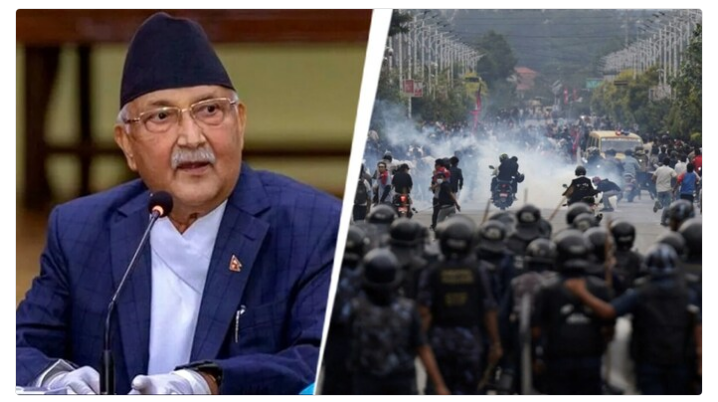
Kathmandu witnessed a second consecutive day of chaos as massive youth-led protests, driven by Nepal’s so-called “Gen Z movement,” escalated against Prime Minister KP Sharma Oli’s government. What began as demonstrations against the ban on 26 social media apps has now widened into an anti-corruption revolt, demanding Oli’s immediate resignation.
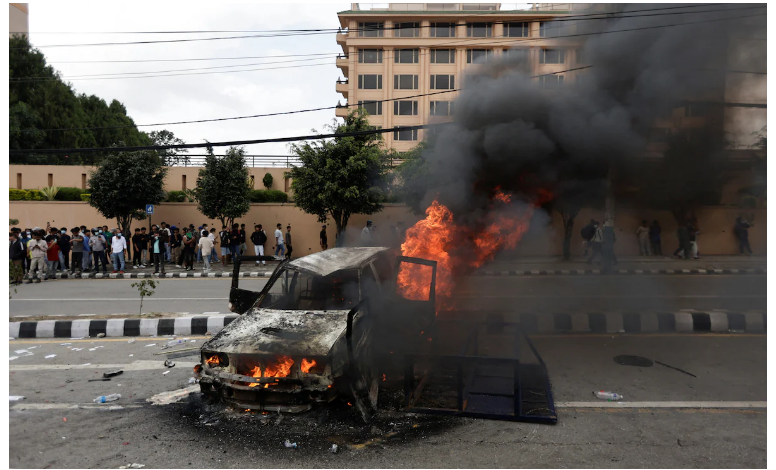
Protesters in Kalanki burned tyres, blocked roads, and raised slogans such as “KP Chor, Desh Chhod” (Oli is a thief, quit the country). Several houses of ministers, including the residence of President Ram Chandra Poudel, came under attack, while demonstrators vandalised the home of former Prime Minister Pushpa Kamal Dahal ‘Prachanda’ in Lalitpur and staged demonstrations outside Sher Bahadur Deuba’s house in Kathmandu. Poudel’s residence was also set ablaze.
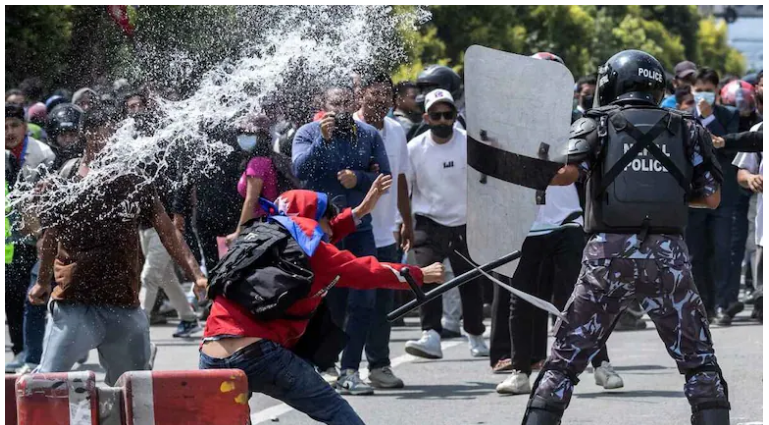
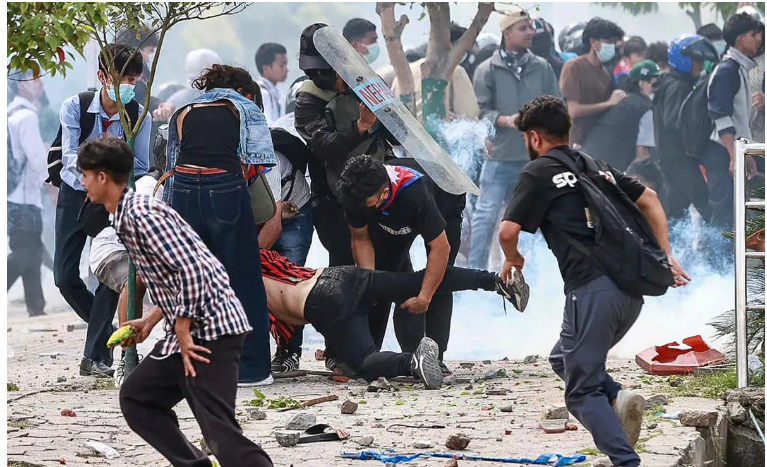
The situation turned violent when agitators stormed the Parliament complex, prompting police to use tear gas, water cannons, and even live rounds to disperse the crowd. Authorities quickly imposed curfews across Kathmandu, Lalitpur, and Bhaktapur districts, but protests also spread to Pokhara, Butwal, Bhairahawa, Bharatpur, Itahari, and Damak.
Despite the growing unrest, Nepal Minister Prithvi Subba Gurung told that “Prime Minister Oli will not resign” and blamed political parties and anarchist groups for hijacking the demonstrations. Oli himself appealed for calm and dialogue, while the Cabinet announced a committee to investigate the violence and killings.
Meanwhile, the government is facing an exodus from within. Home Minister Ramesh Lekhak resigned on moral grounds after Monday’s deadly clashes. Agriculture Minister Ramnath Adhikari, Health Minister Pradeep Paudel, Youth and Sports Minister Teju Lal Chaudhary, and Water Minister Pradeep Yadav also stepped down, citing the administration’s failure to address public grievances. Legislator Asim Shah quit as well, and senior Congress leader Shekhar Koirala reportedly urged close allies to resign.
On Monday, thousands of school and college students rallied in front of the Parliament under banners reading “Shut down corruption, not social media” and “Youths against corruption.” The movement, initially sparked by the controversial social media ban, has evolved into a broader anti-corruption campaign, placing Oli’s leadership under severe pressure.
Leave a Reply