
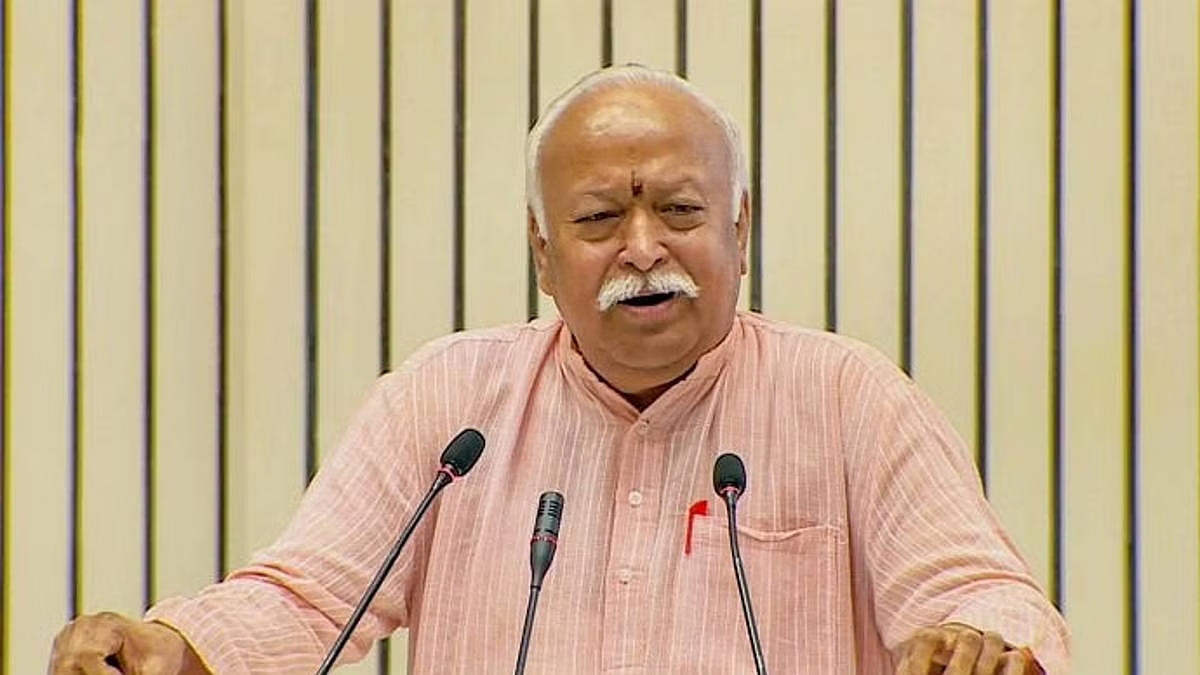
During a pivotal address marking the centenary celebrations of the Rashtriya Swayamsevak Sangh (RSS) in Nagpur, its chief—Mohan Bhagwat—delivered a strong message rejecting compulsion in international trade and urging renewed focus on Swadeshi (indigenous production) in response to recent US tariffs on Indian goods.
Over recent months, the United States imposed steep reciprocal and penalty tariffs on Indian exports, elevating duties on select goods to 50 percent. The latest phase followed New Delhi’s continued imports of Russian oil, which Washington contested. These measures have sparked trade tensions and placed pressure on Indian exporters across sectors.
Against this backdrop, Bhagwat weighed in, framing the imposition of tariffs as symptomatic of a fear of India’s rising strength and trajectory on the global stage.
Key Messages from Bhagwat’s Address
Trade Must Be Voluntary, Not Coerced
Bhagwat emphasized that international trade must operate without coercion or compulsion. While the world is interdependent and imports and exports are inevitable, they should arise from mutual consent, not pressure. Bhagwat argued that external pressures distort trade practices and undermine sovereignty.
He stated that dependence on foreign goods should not become a compulsion—India must assert its autonomy through capable production and healthy internal capacity. The RSS chief urged elevation of Swadeshi not as anti-international, but as a strategic anchor to ensure internal resilience and balanced external engagement.
Tariffs as Reaction to India’s Growth
Bhagwat characterized the US tariffs as a defensive move by foreign powers unsettled by India’s increasing global influence. “What will happen if India grows? So impose tariffs,” he remarked, contending that the “fear of growth” is behind protectionist policy targeting India.
He warned that such acts stem from a “me and mine” mindset—countries hesitant of others’ ascent, seeking to constrain rather than compete. He called for introspection: instead of reacting defensively, India must respond through strengthening internal capabilities.

Embracing Diversity, Rejecting ‘Us vs Them’ Mentality
In the same address, Bhagwat cautioned against divisions framed as “us vs them.” He said that India’s heritage is rooted in diversity, and differences must be expressed within the law and institutional fairness, not through provocations or communal discord. The administration must act fairly, and youth must remain vigilant to prevent the “grammar of anarchy.”
RSS Stance on Government and Policy
While offering strong views on trade and national strategy, Bhagwat clarified that the RSS does not dictate government policy. He stated the organization would support governmental decisions but would not instruct how to respond to foreign pressures, including the US tariffs.
Reactions and Strategic Significance
Bhagwat’s remarks are significant for several reasons:
- Ideological framing: By invoking Swadeshi, he links economic strategy to cultural identity and self-sufficiency, underlining a worldview in which national strength is tied to internal capacity.
- Signal to stakeholders: His public endorsement of trade autonomy and self-reliance may guide policymakers, business leaders, and public sentiment about how India navigates external economic pressure.
- Diplomatic tone: Though critical of coercive trade, Bhagwat’s remarks avoid overt confrontation. The call for voluntary trade and balanced diplomacy suggests a conscious calibration—assertive, yet not isolationist.
- Domestic impetus: The push toward Swadeshi resonates with long-held nationalistic narratives, potentially galvanizing local manufacturing, consumer preference for indigenous goods, and efforts to reduce strategic dependence.
As India confronts US trade pressures and broader geopolitical friction, Bhagwat’s words may influence discourse on trade strategy, self-reliance, and India’s posture in global affairs. How the government, industry, and diplomatic establishment respond will be closely watched in the upcoming months.
Leave a Reply