
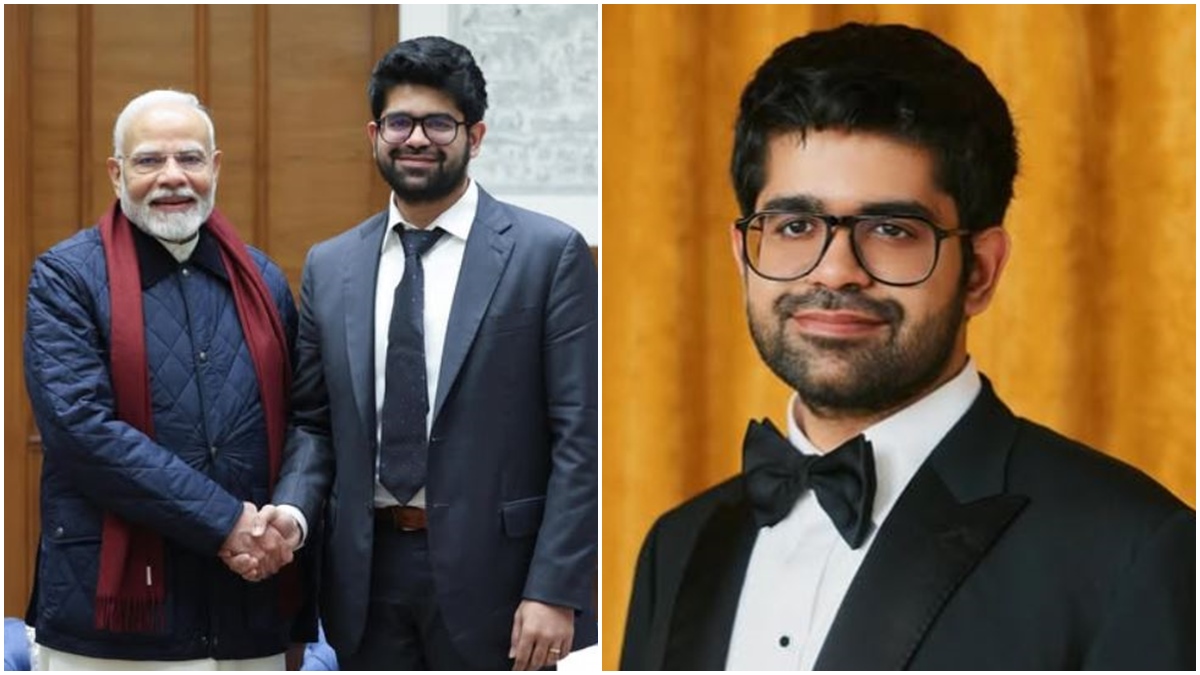
At just 31 years old, Chennai-born AI entrepreneur Aravind Srinivas has shot to the top of India’s wealth charts as the youngest billionaire, according to the 2025 edition of the M3M Hurun India Rich List. With a reported net worth of ₹21,190 crore, his rise underscores a shift in India’s wealth dynamics—from traditional sectors toward deep tech and artificial intelligence.
Early Life and Academic Foundation
Born on June 7, 1994, in Chennai, Srinivas displayed a strong inclination toward science and technology from an early age. He pursued his undergraduate studies in engineering at IIT Madras, where he also reportedly lectured on advanced topics like reinforcement learning. His academic journey led him to the University of California, Berkeley, where he earned a PhD in Computer Science. His doctoral research focused on cutting-edge fields such as contrastive learning, transformer architectures, reinforcement learning, and generative modeling.
During his doctoral work, Srinivas also taught courses on deep unsupervised learning in 2020 and 2021, according to publicly available profiles.

Professional Trajectory Before Entrepreneurship
Before founding his own company, Srinivas gained valuable experience at global AI and tech leaders. He worked on reinforcement learning efforts at OpenAI, and later joined DeepMind in London to focus on contrastive learning research. At Google, he contributed to vision model development—among them systems such as HaloNet and ResNet-RS. He subsequently returned to OpenAI as a research scientist and was involved in the development of the DALL-E 2 image-generation model.
These roles gave him deep technical insight into machine learning, generation models, and scaling AI infrastructure—skills that would prove foundational to his later success.
Founding Perplexity AI and Scaling
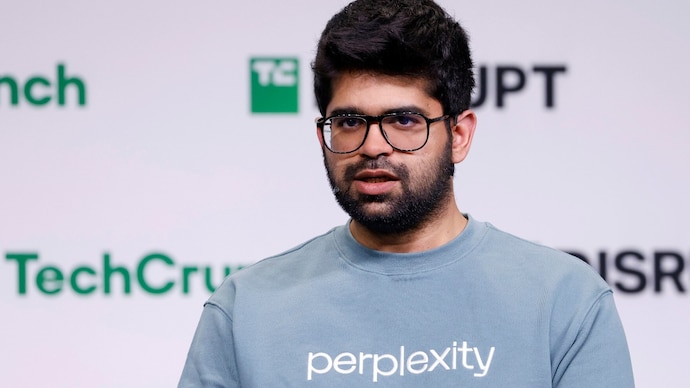
In August 2022, Srinivas cofounded Perplexity AI alongside Denis Yarats and Andy Konwinski. The company positions itself as a next-generation AI search and answer engine focused on combining retrieval methods with conversational and generative capacities to deliver fast, trustworthy responses. Under his leadership, Perplexity expanded rapidly—particularly in India, which now constitutes a major user base and strategic market for the company.
Beyond product development, Srinivas has also ventured into angel investing, backing AI startups such as ElevenLabs (text-to-speech) and Suno (text-to-music). He is reportedly exploring establishing engineering bases in India (Bengaluru or Hyderabad) and related ventures in sectors like education, healthcare, travel, and retail.
The Billionaire Milestone
In the 2025 M3M Hurun India Rich List, Srinivas made a stunning debut with a net worth estimated at ₹21,190 crore, earning him the title of India’s youngest billionaire. His ascent spotlights the growing importance of AI, deep tech, and knowledge-based ventures in India’s wealth ecosystem. The Hurun list itself frames his entry as evidence of India’s shift from a services-led economy to one driven by product innovation and deep tech leadership.
Srinivas now joins a growing cohort of tech founders and innovators reshaping India’s rich list landscape—where inheritance and traditional industries once dominated.
Significance, Challenges, and Future Potential
Srinivas’s rise has multiple implications:
- Signal for Indian deep tech: His success underscores that domestic AI and software ventures can generate generational wealth and compete globally.
- Talent and ecosystem impact: As someone with both technical depth and entrepreneurial orientation, he becomes a role model for engineers aspiring to build and scale global products from India.
- Scalability and sustainability: Maintaining growth and scale in AI is expensive—compute, data, regulation, and talent constraints are persistent challenges.
- Regulatory and ethical responsibilities: As AI becomes more central, ensuring responsible design, fairness, transparency, and compliance will be critical for long-term reputation and viability.
- Wealth dynamics: Srinivas’s entry also prompts debates about wealth creation, opportunity, inequality, and the balance between innovation and social impact.
While this milestone is spectacular, Srinivas’s journey ahead is filled with expectations and responsibilities. Whether he can sustain growth, expand into new domains, and shape India’s standing in global AI will define whether this debut is a first act or just a remarkable peak.
Leave a Reply