
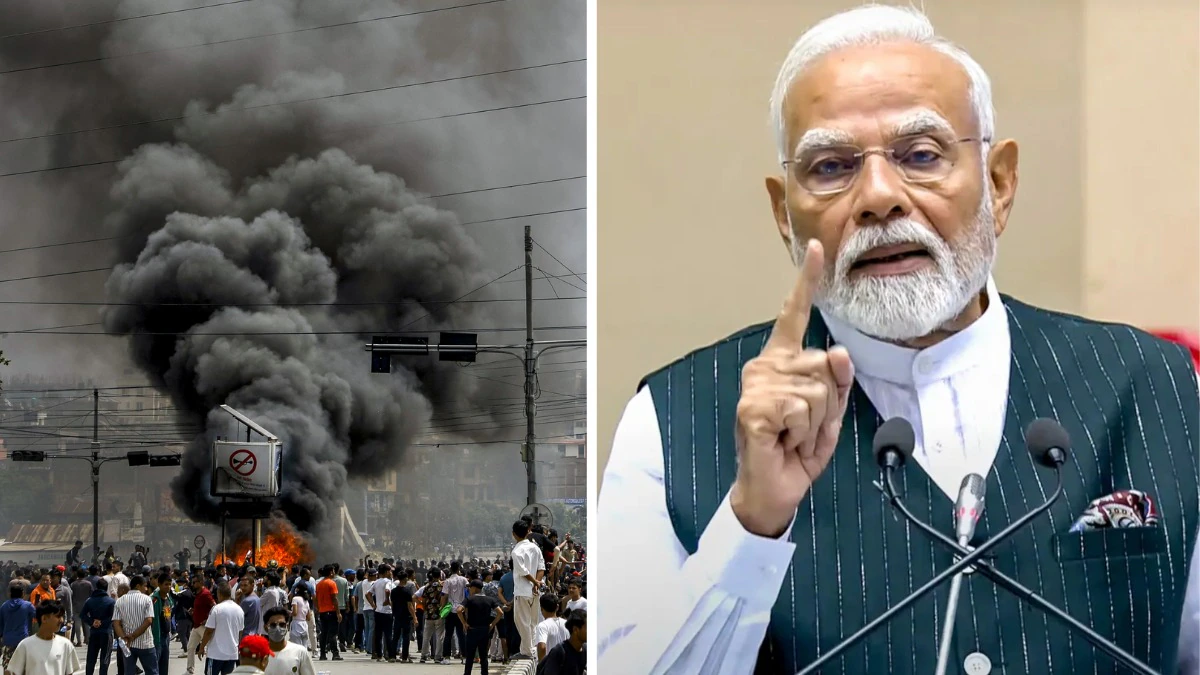
Prime Minister Narendra Modi on Tuesday expressed deep concern over the escalating unrest in Nepal, where violent anti-government protests have claimed several lives, mostly of young demonstrators. After reviewing rain-related damages in Himachal Pradesh and Punjab, Modi chaired a Cabinet Committee on Security meeting to assess the situation in the neighbouring country.
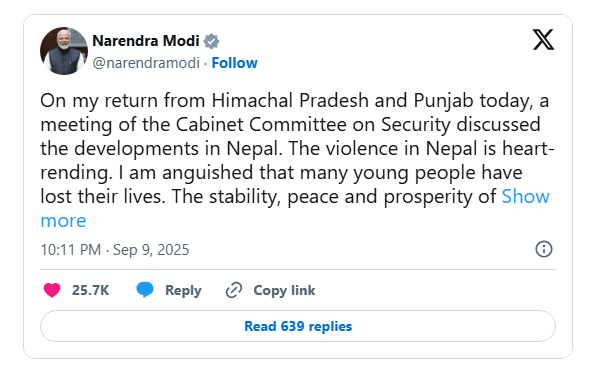
Stressing India’s long-standing ties with Nepal, he said that the “stability, peace, and prosperity of Nepal are of utmost importance to us.”
In a post on X, Modi described the violence as “heart-rending” and expressed anguish at the loss of young lives. Appealing directly to the people of Nepal, he urged them to rise above anger and division and support peace, unity, and stability.
Meanwhile, Nepal’s political crisis deepened as Prime Minister K. P. Sharma Oli resigned amid the escalating protests. Hours later, the Nepal Army announced it would assume charge of security operations from 10 pm, warning that certain groups were exploiting the unrest to harm citizens and damage public property.
The army assured that all security agencies would be mobilised if the violence continued, urging people to refrain from destructive acts.
The protests, largely spearheaded by Gen Z activists, began as resistance against the government’s controversial social media ban. Although the ban was revoked, anger spread over corruption allegations and the deaths of 19 protesters in police action. Demonstrators in Kathmandu demanded accountability from political leaders, circulating alleged evidence of lavish lifestyles on social media.
The agitation took a violent turn as protesters targeted the residences of senior leaders. Former Prime Minister Jhala Nath Khanal’s house was torched, leading to the death of his wife, Rabilaxmi Chitrakar. The homes of President Ramchandra Paudel, former PM Pushpa Kamal Dahal, and former PM Sher Bahadur Deuba also came under attack, with roads blocked by burning tyres despite curfews in the capital.
In his resignation letter, Oli said that extraordinary circumstances demanded a constitutional resolution. President Paudel called for restraint, while Nepal’s security chiefs issued a joint statement emphasising dialogue as the only way forward. The Nepal Army reaffirmed its commitment to safeguard the nation’s independence, sovereignty, and unity.
The crisis, driven by youth anger and deep political distrust, continues to test Nepal’s fragile democracy, raising concerns across the region.
Leave a Reply