
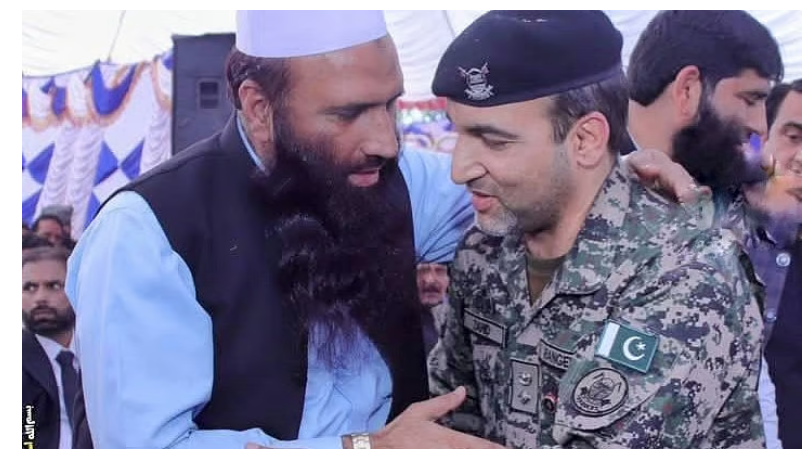
New Delhi: A resurfaced photograph of US-designated terrorist Saifullah Kasuri, the alleged mastermind of the April 22 Pahalgam terror attack in Jammu and Kashmir, alongside a Pakistani army officer has reignited scrutiny over Pakistan’s links with terror groups. The image, believed to be taken in April, has been widely circulated on social media platform X, along with other visuals showing Kasuri with Pakistani security officials.
Kasuri, also known as Khalid, is identified by Indian intelligence agencies as a senior commander of Lashkar-e-Taiba (LeT) and a close aide of the group’s founder Hafiz Saeed. He is suspected of directing infiltration across the Line of Control (LoC) and reportedly operates from Pakistan-occupied Kashmir, overseeing modules of The Resistance Front (TRF), a Lashkar proxy active in the Valley. Intelligence reports suggest Kasuri has been central to multiple cross-border operations, with his name surfacing repeatedly in international dossiers on terrorism. In one video, he proclaimed that Kashmir would become the “Land of Pure” by 2026.
The April 22 Pahalgam attack left 26 people dead when armed militants in military fatigues opened fire at Baisaran valley after allegedly identifying victims by faith. Initially, TRF claimed responsibility on Telegram but later retracted its statement following global backlash. In retaliation, India launched Operation Sindoor on May 7, striking nine terror launchpads in Pakistan and Pakistan-occupied Kashmir, eliminating over 100 militants.
Shortly after India’s strikes, another image circulated online showing a Lashkar-e-Taiba commander with Pakistani army personnel attending the funeral of slain militants. India’s Foreign Secretary Vikram Misri presented the image in a press briefing as evidence of Pakistan’s complicity. Pakistan responded with limited military action before both nations agreed to a ceasefire. While then-US President Donald Trump claimed credit for brokering peace, India firmly denied any third-party involvement.
Alongside military retaliation, India escalated diplomatic pressure by suspending the Indus Waters Treaty, halting trade at the Attari-Wagah border, revoking Pakistani visas, and lobbying for Islamabad’s return to the Financial Action Task Force (FATF) grey list. These measures underscored India’s evolving policy of treating terror attacks from Pakistan as “acts of war,” reflecting a tougher security posture in the region.
Leave a Reply