
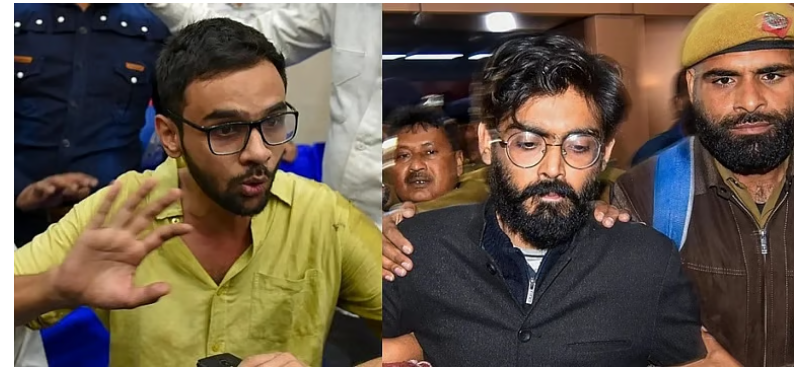
New Delhi: The Delhi High Court on Tuesday dismissed the bail pleas of activists Umar Khalid, Sharjeel Imam, and six others in the larger conspiracy case linked to the February 2020 Delhi riots. The bench of Justices Navin Chawla and Shalinder Kaur ruled that the accused must remain in custody while trial proceedings continue. The decision comes after many of the accused have been incarcerated since 2020, with some bail applications pending since 2022.
Umar Khalid, the former JNU student leader, has been charged with delivering provocative speeches, coordinating funding, and managing logistics for protests under the Unlawful Activities (Prevention) Act (UAPA) Sections 13, 16, 17, 18, along with Indian Penal Code (IPC) Sections 124A (sedition), 153A (promoting enmity), 302 (murder read with conspiracy), 120B (criminal conspiracy), 147–151 (rioting/unlawful assembly), and sections of the Arms Act. Sharjeel Imam faces similar charges for allegedly inciting road blockades and protests in Delhi.
Other accused include Khalid Saifi, associated with United Against Hate; Shifa-ur-Rehman, president of the Jamia Millia Islamia Alumni Association; Meeran Haider, Jamia student and RJD youth leader; Gulfisha Fatima, student activist; Ishrat Jahan, former Congress councillor; and Asif Iqbal Tanha, Jamia student. All eight have been booked under UAPA and relevant IPC sections for allegedly conspiring to incite and organize protests that escalated into violent clashes during the CAA-NRC protests.
The February 2020 riots in northeast Delhi resulted in 53 deaths and over 700 injuries over three days. Investigators claim the accused played key roles in mobilizing crowds, coordinating logistics, and instigating violence, making them central figures in the conspiracy behind the unrest.
Leave a Reply