
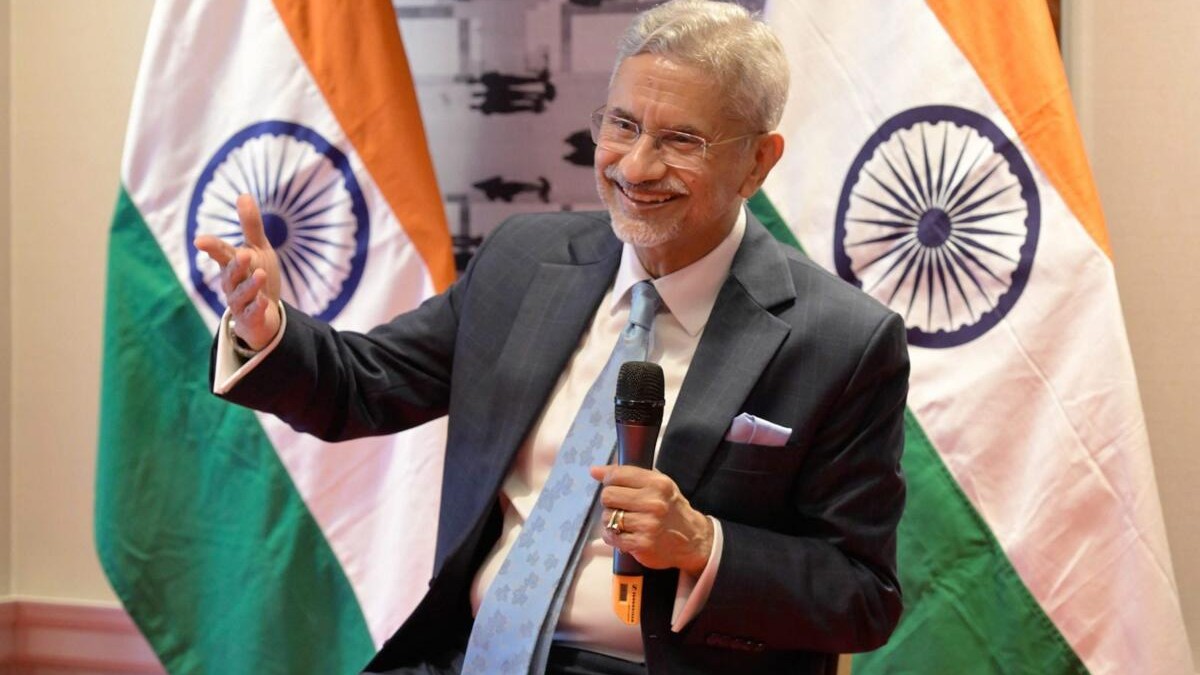
On Sunday, External Affairs Minister S Jaishankar reflected on his journey into the Indian civil services, revealing that his UPSC interview occurred on a significant date—March 21, 1977—the very day the Emergency was officially lifted in India. During an event in Delhi for a new group of civil services candidates, Jaishankar shared personal insights and important lessons from his nearly fifty-year-old experience.
Looking back at the political environment of that era, Jaishankar noted that the atmosphere was charged with the consequences of the 1977 General Elections, which had just concluded the day before. “Election results were coming from the previous day… The sense of the defeat of the Emergency rule was coming into understanding. In a way, that is what got me through the interview,” he remarked.
He characterized the UPSC civil services examination as an “Agni Pariksha” (trial by fire), stating that the true challenge lies not only in passing the written exams but also in confronting the interview. He highlighted its distinctiveness as a selection process, describing it as one of the most exceptional methods globally for choosing candidates for public service.
He recounted his own experience: “My interview was on March 21, 1977. That was the day the Emergency was revoked. Revoked! So, I go in for an interview at Shahjahan Road… First person that morning,” he shared.
The Emergency, which was imposed by then Prime Minister Indira Gandhi in June 1975, finally ended with the revocation order on March 21, 1977. Elections were held between March 16 and 20, leading to a significant defeat for the Congress party and the emergence of the Janata Party, with Morarji Desai assuming the role of the next Prime Minister.
During the interview, Jaishankar reflected on being questioned about the election outcomes and the prevailing political atmosphere. As a political science student at Jawaharlal Nehru University (JNU), he felt adequately prepared. “I was fortunate,” he confessed, sharing that he had been actively involved in the election campaign aimed at defeating the Emergency regime. “We participated in the 1977 election campaign. We all went there and worked towards the downfall of the Emergency,” he stated.
Jaishankar recounted that he became so engrossed in the conversation during the interview that he temporarily forgot he was being assessed. “In that moment, my communication skills somehow aligned,” he remembered.
One of the key insights from the interview, as per Jaishankar, was the ability to communicate effectively under pressure without causing offense. He noted that this skill would greatly benefit civil servants throughout their careers. He also mentioned his realization of what he termed the “Lutyens’ bubble” after observing the interviewers’ astonishment at the election results. “These individuals were genuinely shocked. They could hardly believe that this election outcome had occurred, while for us, the regular students, we could sense a wave of opposition to the Emergency,” he remarked.
From this experience, he gleaned two vital lessons: the importance of articulating oneself clearly during high-pressure situations and the understanding that influential individuals may sometimes be out of touch with the realities on the ground. “How do you persuade, how do you clarify—this was one takeaway. The second takeaway was that prominent figures might be living in a bubble, unaware of the actual happenings in the country,” he added.
In addressing the newly appointed civil servants, Jaishankar emphasized that they were entering a service, not just a job. He encouraged them to take responsibility for the nation’s developmental objectives and to emerge as leaders in India’s “Amrit Kaal” — the 25-year journey towards becoming a developed nation by 2047. “This Amrit Kaal of 25 years represents your time. It is your time because you will need to put in the effort, you will need to achieve results, and you will be the ones who benefit from this period; you will be the pioneers of this age,” he stated.
In closing his speech, he urged the officers to adopt a long-term perspective and consider the part they would play in creating a ‘Viksit Bharat.’ “I want you to envision the next 20 years… As we embark on the path to Viksit Bharat, what will your role be? And, what mindset must you cultivate to fulfill the vision of transforming our nation into a developed one?” Jaishankar remarked.
Leave a Reply