
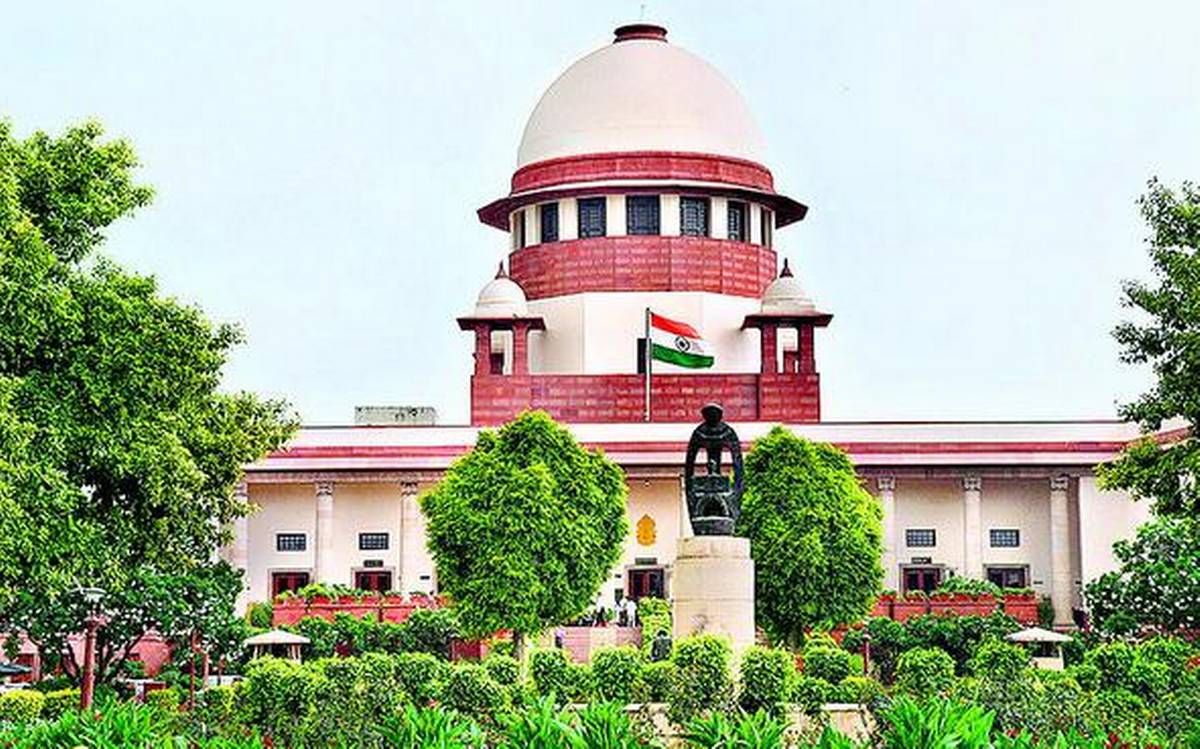
New Delhi: On Tuesday, a petition was submitted to the Supreme Court requesting that the Election Commission be instructed to carry out special intensive revisions of electoral rolls at regular intervals across the nation, especially prior to Parliamentary, state assembly, and local body elections. This is aimed at ensuring that only Indian citizens determine the “polity and policy of the country, rather than illegal foreign infiltrators.”
In his petition, advocate Ashwini Kumar Upadhyay argued that it is the constitutional responsibility of the Centre, State, and Election Commission to guarantee that only legitimate citizens are allowed to vote, excluding foreigners.
He asserted, “The demographics of 200 districts and 1500 Tehsils have shifted since independence due to significant illegal infiltration, deceptive religious conversions, and population surges.”
The petitioner brought the plea before a bench headed by Justice Sudhanshu Dhulia and Joymalya Bagchi, requesting that his case be listed alongside other petitions contesting the validity of the process on July 10. The court indicated that the registry would decide if the issues were rectified.
Mahua and others approach SC against EC’s roll revision in Bihar.
His petition highlighted that Article 324(1) grants the Election Commission the authority for the supervision, direction, and control of elections. A comprehensive revision is essential to uphold this constitutional duty and maintain electoral integrity. Article 326 ensures the right to vote, and accurate electoral rolls are crucial for safeguarding this right by removing false, ghost, or duplicate entries.
“Section 14(1) of the RP Act requires annual summary revisions of electoral rolls. The special intensive revision of electoral rolls is a unique measure under Section 21(3) to rectify serious irregularities when the standard cycle is inadequate,” it stated.
Given that victory margins are frequently within a few hundred votes, illegal voters can significantly sway election outcomes. The special intensive revision of electoral rolls serves to prevent fraud and protect the electorate’s mandate, it concluded.
The petition also argued that infiltration has not only disturbed the demographic balance in border regions but across the entire nation. This has led to difficulties in law enforcement and governance.
In Bihar, which has 243 Assembly Constituencies and an estimated 8,000-10,000 illegal, duplicate, and ghost entries in each constituency, even minor discrepancies of 2,000-3,000 votes can influence election results. Consequently, a special intensive revision mandated by the Election Commission’s authority is intended to purify the electoral rolls. Failing to carry this out would endanger the integrity of elections and the fundamental rights guaranteed by the Constitution, the petition asserted.
“It is quite astonishing that multiple petitions have been submitted to this court requesting the annulment or quashing of the EC’s order dated June 24, 2025, citing violations of Articles 14, 19, 21, 325, and 326 of the Constitution, as well as the provisions of the Representation of People Act and the Registration of Electors Rules, 1960,” the petition stated.
Thus, it is the responsibility of the Centre, State, and ECI to carry out a special intensive revision of voter lists and convey a strong message that India is resolute in its fight against illegal infiltration, the petition emphasized.
On Monday, the Supreme Court agreed to hear on July 10 a series of petitions contesting the validity of the Election Commission’s decision to implement a special intensive revision of Electoral Rolls in Bihar, in preparation for the Assembly elections scheduled for November this year.
Leave a Reply