
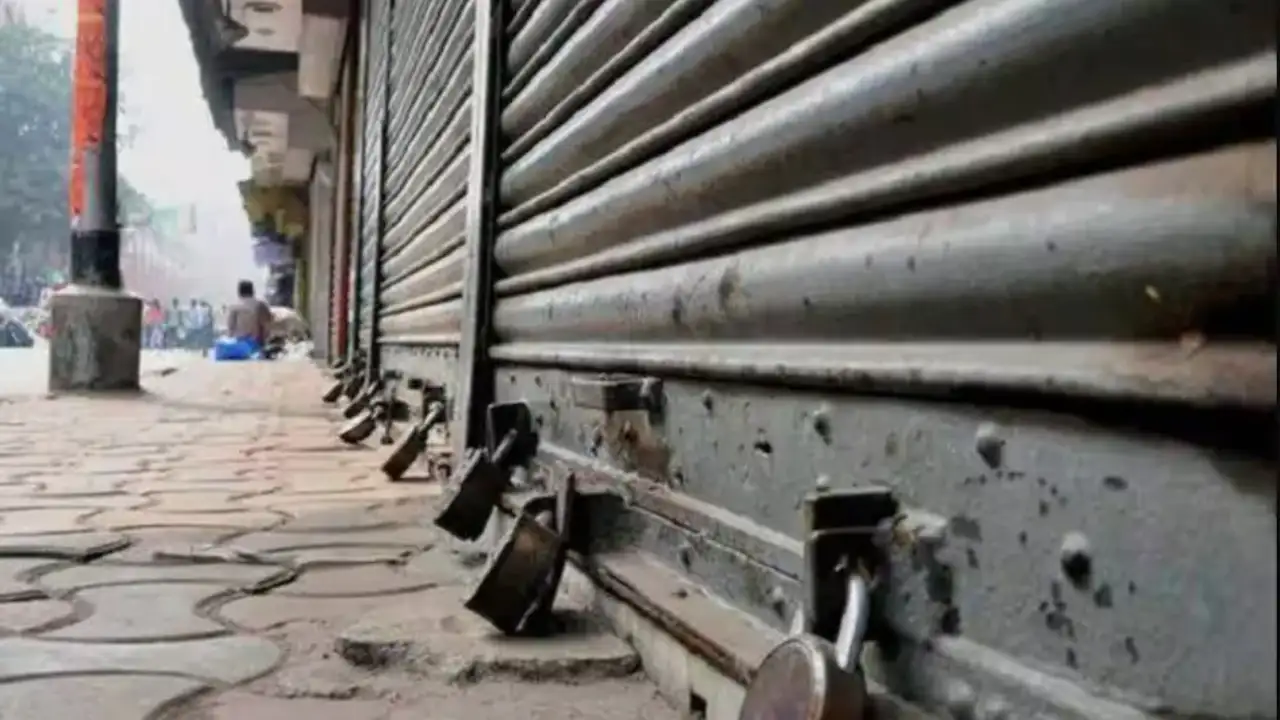
More than 250 million workers in various government sectors, including banking, insurance, postal services, and coal mining, are preparing to participate in a nationwide strike, known as Bharat Bandh, on Wednesday, July 9.
This strike is anticipated to cause significant disruptions to public services throughout the nation.
In this article, we address who has organized the strike and the potential effects it may have on daily life.
1. Who has initiated the July 9 Bharat Bandh?
A coalition of 10 central trade unions and their affiliates has called for a general strike, or ‘Bharat Bandh’, to protest against the government’s policies that they deem anti-worker, anti-farmer, and pro-corporate.
The Samyukta Kisan Morcha, along with a united front of agricultural workers’ unions, has also pledged their support for the strike.
2. Who will be involved in the Bandh?
Amarjeet Kaur from the All India Trade Union Congress stated that over 250 million workers are expected to participate in the strike. Additionally, farmers and rural laborers will join the nationwide protest.
Harbhajan Singh Sidhu from the Hind Mazdoor Sabha indicated that the strike will impact various sectors, including banking, postal services, coal mining, manufacturing, and state transportation services.
Union representatives from NMDC Ltd and other non-coal mineral sectors, steel, state government departments, and public sector enterprises have also announced their intention to join the strike.
Other organizations participating include:
Indian National Trade Union Congress (INTUC), Centre of Indian Trade Unions (CITU), Self Employed Women’s Association (SEWA), Labour Progressive Federation (LPF), and United Trade Union Congress (UTUC)
3. Why are workers protesting?
A series of demands from the trade unions’ forum, which include tackling unemployment, filling sanctioned positions, creating additional jobs, increasing the days and pay for MGNREGA workers, and implementing similar legislation for urban areas, have prompted the general strike on Wednesday.
Last year, the forum presented a 17-point charter of demands to Labour Minister Mansukh Mandavia, as stated by the workers’ union forum in its recent announcement.
Additionally, it noted that the government has not held the annual labour conference for the past decade and continues to make decisions that contradict the interests of the workforce, attempting to enforce four labour codes that undermine collective bargaining, hinder union activities, and favor employers under the guise of ‘ease of doing business.’
The forum also claimed that current economic policies are leading to increased unemployment, rising costs of essential goods, wage stagnation, and cuts in social sector funding for education, health, and basic civic services, all of which contribute to greater inequality and suffering for the poor, lower-income groups, and the middle class.
Trade unions have been opposing the “privatization of public sector enterprises and services, outsourcing policies, contractorization, and the casualization of the workforce,” it stated.
Furthermore, it alleged that in government sectors, rather than offering regular positions to the youth, there is a trend of hiring retirees, as seen in the Railways, NMDC Ltd, the steel industry, and educational sectors, which is detrimental to the nation’s growth, especially since 65 percent of the population is under 35 years old and the highest unemployment rates are among those aged 20 to 25.
4. Which sectors will be impacted by the general strike?
Banking and insurance
Postal services
Coal mining
State transport
Highways and construction
It is crucial to mention that the banking and railway unions have not officially confirmed any bank closures or disruptions in train services.
5. What will continue to operate during the Bharat Bandh?
Schools, colleges, and private offices will operate normally during the strike on July 9. Trains are also anticipated to run as usual, although some delays may occur.
According to the trade union, public transportation options such as buses, taxis, and app-based cab services might be affected.
Leave a Reply